
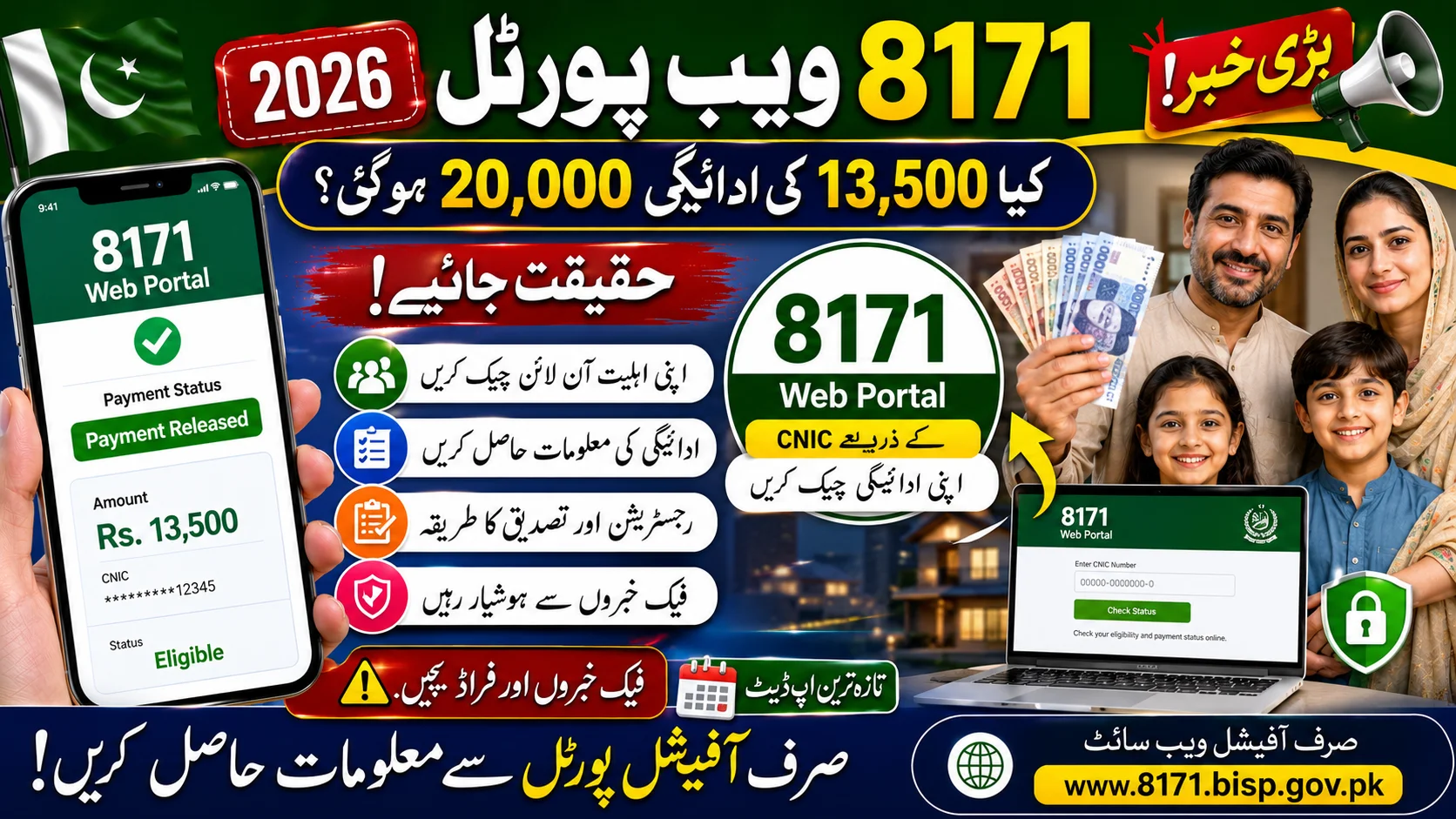
The 8171 Web Portal continues to be one of the most searched platforms in Pakistan as families look for the latest updates regarding financial assistance programs in 2026. In recent weeks, social media posts and viral messages have created confusion about whether the current assistance amount of Rs. 13,500 is being increased to Rs. 20,000 for eligible beneficiaries.
Because thousands of people are searching for authentic information, it is important to understand what is officially confirmed, what remains unverified, and how applicants can safely check their payment or eligibility details without falling for fake claims circulating online.
This article explains the latest 8171 web portal update in simple language while helping users understand how the verification process works and why misleading payment rumors spread so quickly.
What Is the 8171 Web Portal?
The 8171 Web Portal is an online verification system used to help citizens check their eligibility, registration, and payment-related information for financial support programs in Pakistan.
The portal is widely used because it gives applicants a quick and convenient way to understand their current verification or assistance status without depending on unofficial agents or misleading sources.
Main Features of the 8171 Portal
- Eligibility checking
- Registration verification
- Payment information updates
- Household record review
- Assistance status confirmation
- Verification notifications
The system is designed to improve transparency and make the information process easier for deserving families across Pakistan.
Is the Rs. 13,500 to Rs. 20,000 Increase Confirmed?
Recently, many social media pages and unofficial websites have claimed that financial assistance payments are increasing from Rs. 13,500 to Rs. 20,000 for all beneficiaries. These claims have attracted massive public attention, especially among low-income households already struggling with rising inflation and living expenses.
However, applicants should understand that viral claims on social media are not always reliable sources of information.
At present, many beneficiaries continue discussing the standard payment cycle of Rs. 13,500, while rumors regarding higher amounts remain unverified unless officially announced through authentic government channels.
Important Things Applicants Should Know
- Viral screenshots are not official confirmation
- Social media claims can often be misleading
- Assistance categories may vary in different programs
- Emergency relief announcements are sometimes misunderstood
- Payment eligibility always depends on official verification
Consumers should avoid assuming approval for higher payments without proper confirmation through official systems.
Why Are Payment Increase Rumors Spreading So Quickly?
Financial support programs naturally attract significant public attention, especially during periods of inflation and economic pressure. Whenever discussions about payment increases begin online, rumors often spread rapidly through Facebook posts, WhatsApp groups, YouTube videos, and unofficial websites.
Common Reasons Behind Viral Payment Rumors
Clickbait Headlines
Some websites use exaggerated titles only to attract traffic and social shares.
Edited Images and Fake Screenshots
Misleading payment screenshots are often shared online to create confusion among applicants.
Misunderstood Announcements
Sometimes temporary relief packages or special initiatives are incorrectly linked with regular payment programs.
Unofficial Social Media Sources
Random claims circulating on social platforms are frequently presented without proper verification.
This is why applicants should always rely on authentic updates instead of viral internet rumors.
Who May Qualify for Financial Assistance in 2026?
Eligibility for assistance programs generally depends on household verification, economic conditions, and official record assessments.
While final approval always depends on official evaluation, the following groups are commonly discussed in connection with financial support programs.
Low-Income Families
Households facing financial difficulties may qualify after verification.
Widows and Vulnerable Women
Women registered in approved support databases are often considered during assessments.
Families With Updated Records
Applicants whose household information is properly verified may have a smoother review process.
Citizens With Valid CNIC Documentation
Accurate identity records remain important during registration and verification procedures.
Common Reasons Why Payments May Be Delayed
Many applicants become worried when payments are delayed, but processing delays can happen for several administrative reasons.
Possible Causes of Delayed Payments
- Verification review pending
- Household information mismatch
- Biometric verification issues
- Record update processing
- System maintenance delays
- Incomplete survey information
Applicants should remain patient and continue monitoring official updates if their verification process takes additional time.
Benefits of the 8171 Web Portal
The online portal provides several practical advantages for applicants and families seeking financial support information.
Fast Information Access
Users can quickly check updates without visiting multiple offices.
Improved Transparency
Digital verification systems help reduce misinformation and confusion.
Easier Eligibility Checking
Applicants can review their status through a more organized process.
Better Convenience
The system allows users to access information from mobile phones, tablets, or computers.
Reduced Dependence on Agents
Applicants can understand their information directly without relying on third parties.
Important Safety Tips for Applicants
Whenever financial assistance programs trend online, scammers often try to exploit public interest. Applicants should remain careful while sharing personal information.
How to Stay Safe Online
- Never share CNIC details with unknown individuals
- Avoid unofficial registration agents
- Ignore suspicious payment claims
- Do not trust fake prize messages
- Verify updates only through authentic sources
- Protect your personal information carefully
Being cautious online can help applicants avoid fraud and misinformation.
How Applicants Can Stay Updated
Consumers looking for accurate information should always follow trusted and verified channels for updates regarding eligibility, payments, and verification procedures.
Helpful practices include:
- Following official announcements
- Keeping personal records updated
- Monitoring authentic information platforms
- Avoiding rumors from unofficial pages
- Saving important registration information securely
Staying informed through reliable sources can help reduce confusion and prevent unnecessary panic caused by fake news.
Disclaimer
This website is an independent informational platform created only for public awareness and educational purposes. We are not affiliated with BISP, 8171, or any government department. Users should always verify information through official government platforms and avoid trusting unverified social media posts or unofficial websites.
Frequently Asked Questions
Is the Rs. 20,000 payment officially confirmed?
Many online discussions continue regarding higher payment amounts, but applicants should rely only on official announcements for confirmation.
Why do fake payment rumors spread so often?
Financial assistance programs receive high public attention, making them common targets for misleading posts and clickbait content.
Can applicants check their status online?
Yes, online verification systems are commonly used to review registration and eligibility information.
What should applicants do if their payment is delayed?
Applicants should remain patient, ensure their records are updated, and continue checking official updates.
Is it safe to trust social media payment screenshots?
No. Viral screenshots and unofficial posts should never be treated as authentic confirmation.
Final Thoughts
The 8171 Web Portal remains an important source of information for families seeking updates regarding financial assistance programs in Pakistan. While rumors about increasing payments from Rs. 13,500 to Rs. 20,000 continue spreading online, applicants should avoid relying on unofficial claims and instead focus on verified information from authentic channels.
Understanding how the system works, staying cautious online, and avoiding misinformation can help applicants protect themselves from scams and unnecessary confusion. As public interest in financial assistance programs continues to grow in 2026, accurate information and responsible awareness remain more important than ever.